


Step-by-Step Guide to Laying a Patio in Your Garden

Creating a new patio is one of the most rewarding upgrades you can make to your outdoor space. Whether you have a Victorian terrace in RG1 with a compact courtyard garden or a modern family home in RG30 with room to spread out, a well planned patio can transform how you use your garden.
After more than ten years providing patio and landscaping services across Reading, we have helped homeowners design practical, attractive spaces that feel like an extension of their home. If you are thinking about taking on a DIY project or simply want to understand the process before calling in the professionals, this guide will walk you through the essentials.
Step 1: Plan Your Patio with Purpose
Every great patio starts with a clear plan. Before you start digging, think about how you want to use the space. Are you creating a seating area, a place for a barbecue or a low maintenance corner for relaxing after work.
If your garden slopes, or if you have a traditional Reading property with quirky boundary lines, you may need to make slight adjustments. Consider sunlight, access, drainage and how the patio will link with the rest of the garden. Good planning reduces problems later and ensures your landscape paving looks good for years.
It also helps to take precise measurements. Mark out your area with string and pegs so you can visualise the layout and check you are happy with the size. This is the stage many customers call us for advice, especially in older terraced homes where space is tight. We are always happy to share recommendations without any pressure.
Step 2: Choose the Right Materials
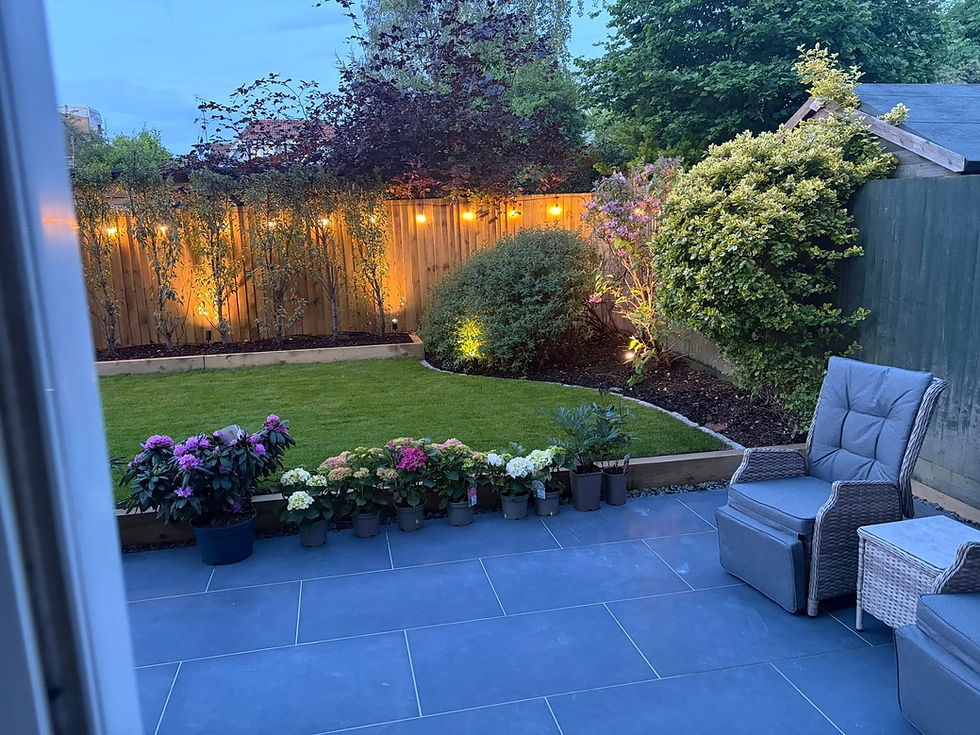
The material you choose sets the tone for your entire garden. High quality sandstone cobbles remain extremely popular in Reading, offering a classic look that suits period homes while still blending beautifully in modern builds. Porcelain and concrete slabs are excellent for a sleek contemporary finish, and they are known for being durable and low maintenance.
Whichever material you pick, avoid the temptation to choose the cheapest option. A patio should last many years, so it is worth investing in something that will withstand our British weather and regular use.
At JM Landscapes we only use quality products that have been tried and tested, and we always source materials that complement the style of your home.
Step 3: Prepare the Ground Properly
Ground preparation is the most important step in the entire process. A rushed job can mean uneven surfaces, water pooling or slabs shifting over time. Start by digging out the area to a suitable depth. Most patios require at least 150mm to accommodate your sub base and mortar bed. Remove any turf, weeds or existing slabs and aim for a clean, flat foundation.
Once excavated, add your sub base layer. We typically use MOT Type 1 because it compacts well and provides essential structure. Use a compactor plate to create a stable surface. If you are handling this yourself, take your time.
A solid foundation is what prevents movement and keeps your paving garden from becoming uneven.
Step 4: Lay the Slabs
After your base is ready, it is time to lay the slabs. Start from a straight edge, ideally the house or a boundary fence, and keep your joints consistent. A full mortar bed is best for long lasting results. Dab methods or partial mortar beds often lead to rocking slabs or cracks.
Check your levels regularly. Every few stones, stand back and look at the alignment. This is where working with experts can save a lot of stress. Our team has laid hundreds of patios across Reading and we have developed a sharp eye for levels, symmetry and layout.
The goal is a smooth, durable finish with gentle runoff so water drains away from your property.
Step 5: Add Finishing Touches
Once the slabs are set, fill the joints with mortar or jointing compound. Take care not to smear the surface of the slabs. After this, the patio simply needs time to cure. Consider the surrounding features too. Edging stones, lighting, borders or a small seating area can elevate the space and help tie everything together.
If your garden also needs turfing, fencing or the installation of a pergola to complete the look, these additions can be organised at the same time. We often combine patio and landscaping projects into one smooth process, which saves customers both time and stress.
When to Call a Professional
Laying a small patio is achievable for confident DIYers, especially if you have a clean, flat garden. However, if your outdoor space is on a slope, if drainage is a concern or if you are working with expensive materials like natural sandstone, it is worth bringing in an experienced landscaper.
We work with homeowners across RG1 to RG31 who want high quality results without hidden costs or delays. We also handle more complex jobs that involve levelling, retaining areas or redesigning the entire space from start to finish.
Why JM Landscapes Is the Best Choice for Your Patio
At JM Landscapes, we approach every project as a partnership. Our customers trust us because we offer clear advice, fair pricing and reliable scheduling. With more than ten years of experience in Reading, we understand local soil types, drainage issues and how different materials perform in our climate.
We prioritise quality from the first design sketch to the final sweep of the site, ensuring your patio enhances your garden for years to come.
We use only high grade materials and proven installation techniques. If your project includes turfing, fencing, composite decking or lighting, we can handle those at the same time.
For garden maintenance after completion, our partnership with M Farmer Gardening and Landscapes ensures your outdoor space stays in excellent condition.
Conclusion
A well designed patio can turn your garden into a practical, attractive space you will enjoy year after year. With the right materials, proper preparation and a careful installation process, your outdoor area can become a valuable extension of your home.
Whether you want to take on the project yourself or prefer support from experienced professionals, our team is here to help.
FAQs
How long does it take to install a patio?
Most patios take between three and seven days depending on size, material and ground conditions. We provide clear timelines so there are no surprises.
What type of slabs are best for a Reading garden?
Sandstone, porcelain and high quality concrete slabs are all excellent choices. The right option depends on your style preferences and maintenance needs.
Can you install lighting or fencing at the same time?
Yes. We often combine patio work with fencing, decking or garden lighting to create a cohesive outdoor space.
Ready to transform your garden Contact JM Landscapes today for a free consultation.


Comments